PYRACLAW MAX
Complexity Deciphered. Reality Redefined.
A polished command-site conversion of the schematic deck, presenting the operating superstructure as a cinematic, inspectable, and access-aware system.
Complexity Deciphered. Reality Redefined.
The slide deck is now rebuilt as a polished one-page web schematic: immersive plates, strict access boundaries, decision gates, evidence rails, and a cinematic command-room interface.


Complexity Deciphered. Reality Redefined.
A polished command-site conversion of the schematic deck, presenting the operating superstructure as a cinematic, inspectable, and access-aware system.

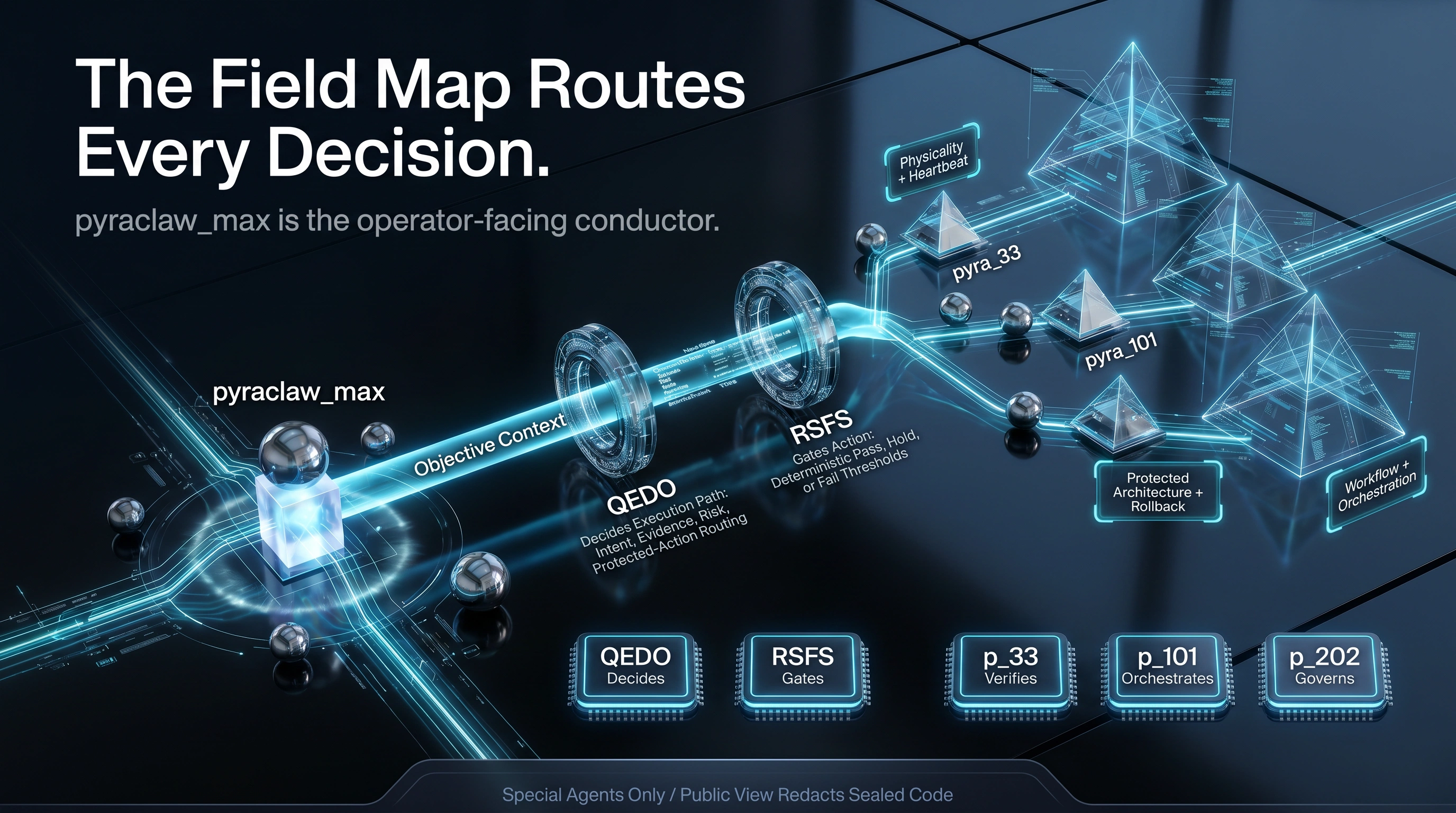
Operator-facing conduction from objective context into disciplined pyramid lanes.
Requests enter through objective context, move through QEDO and RSFS discipline, then land in the correct pyramid lane for substrate, orchestration, or protected architecture.

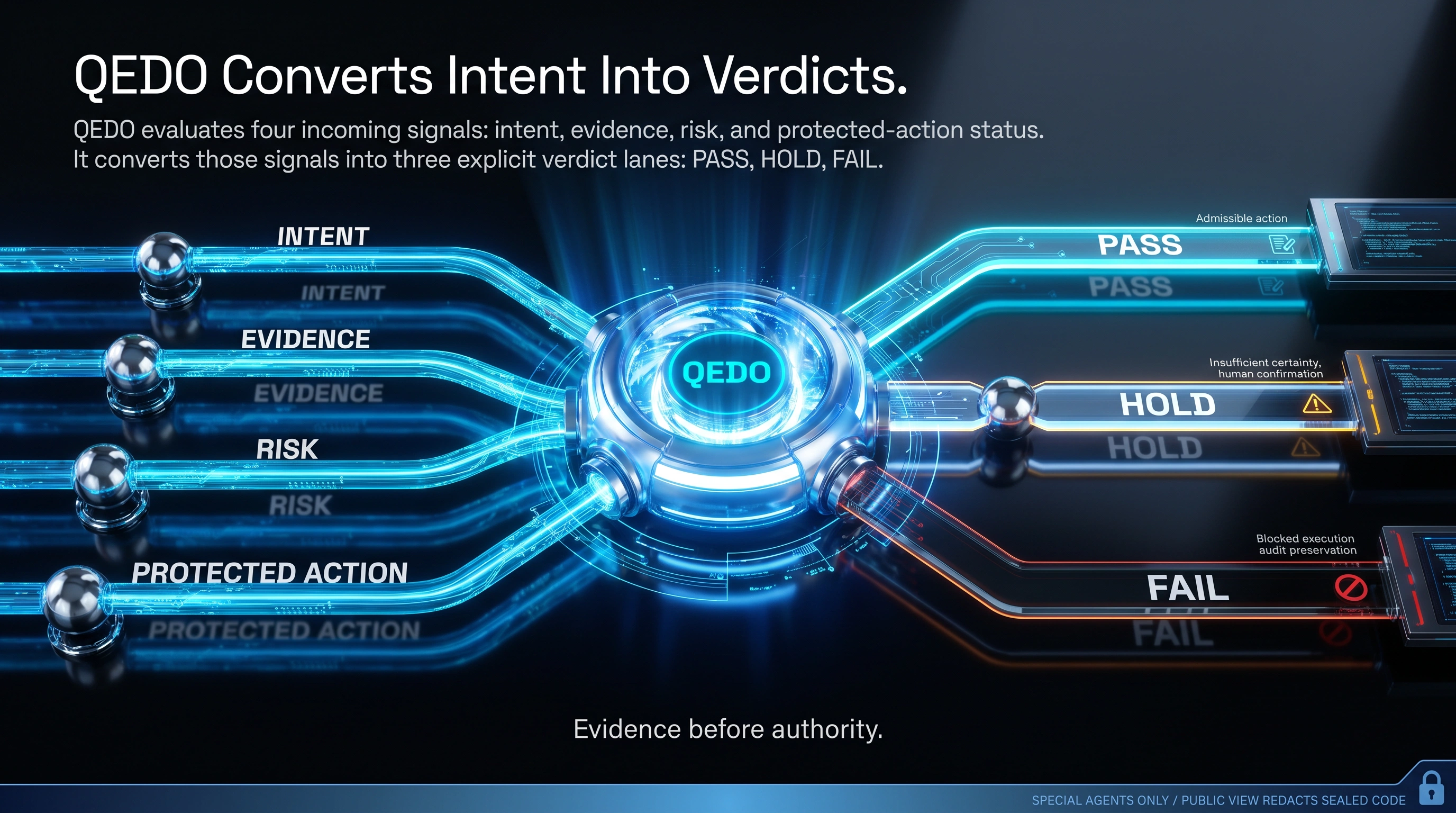
Intent, evidence, risk, and protected-action status resolve into PASS, HOLD, or FAIL.
The decision conductor evaluates operational admissibility before routing work into an execution lane, keeping judgment explicit and inspectable.

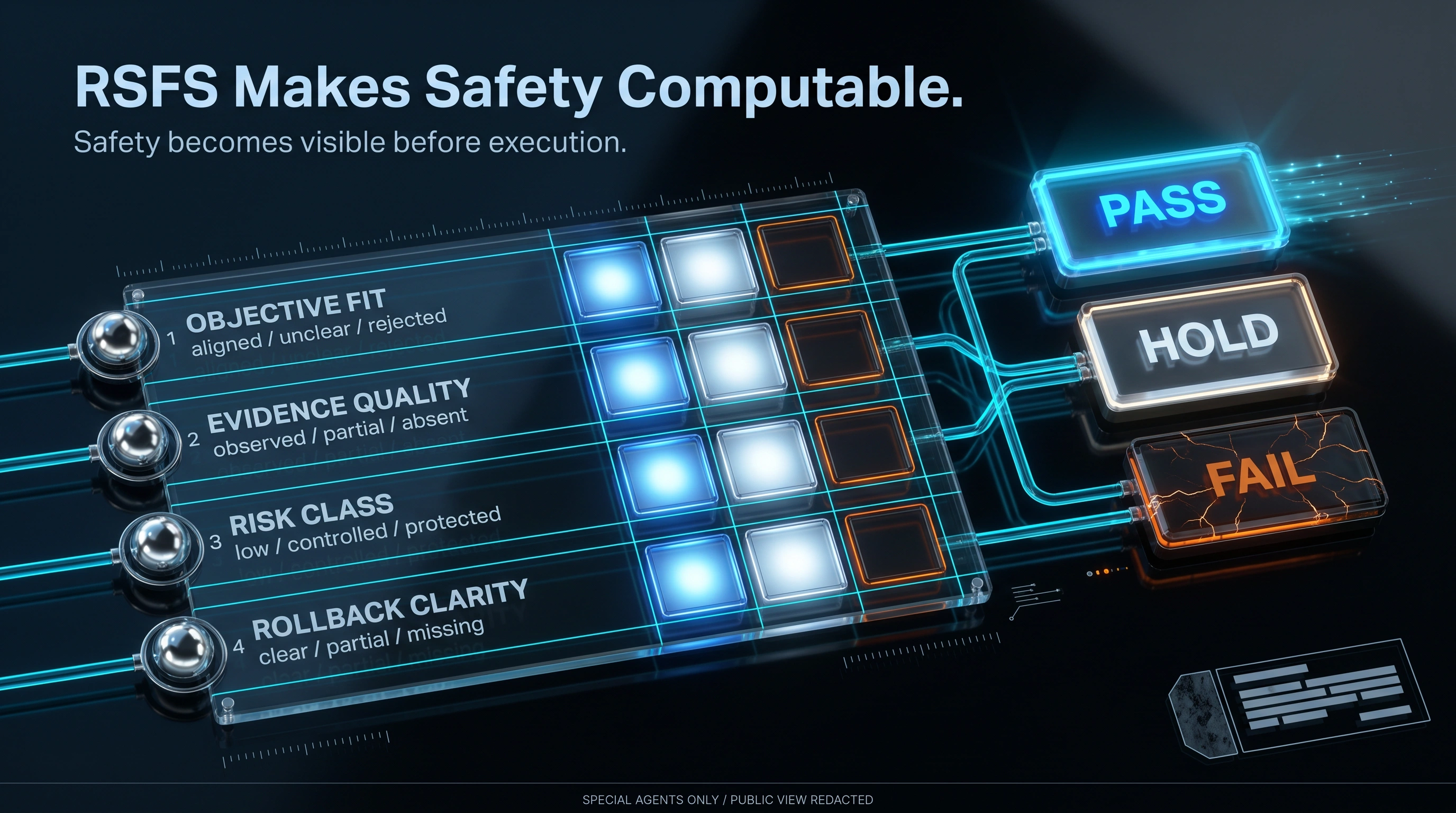
A visible gate matrix scores high-consequence actions before they proceed.
Objective fit, evidence quality, risk class, and rollback clarity become deterministic gate signals instead of informal judgment.

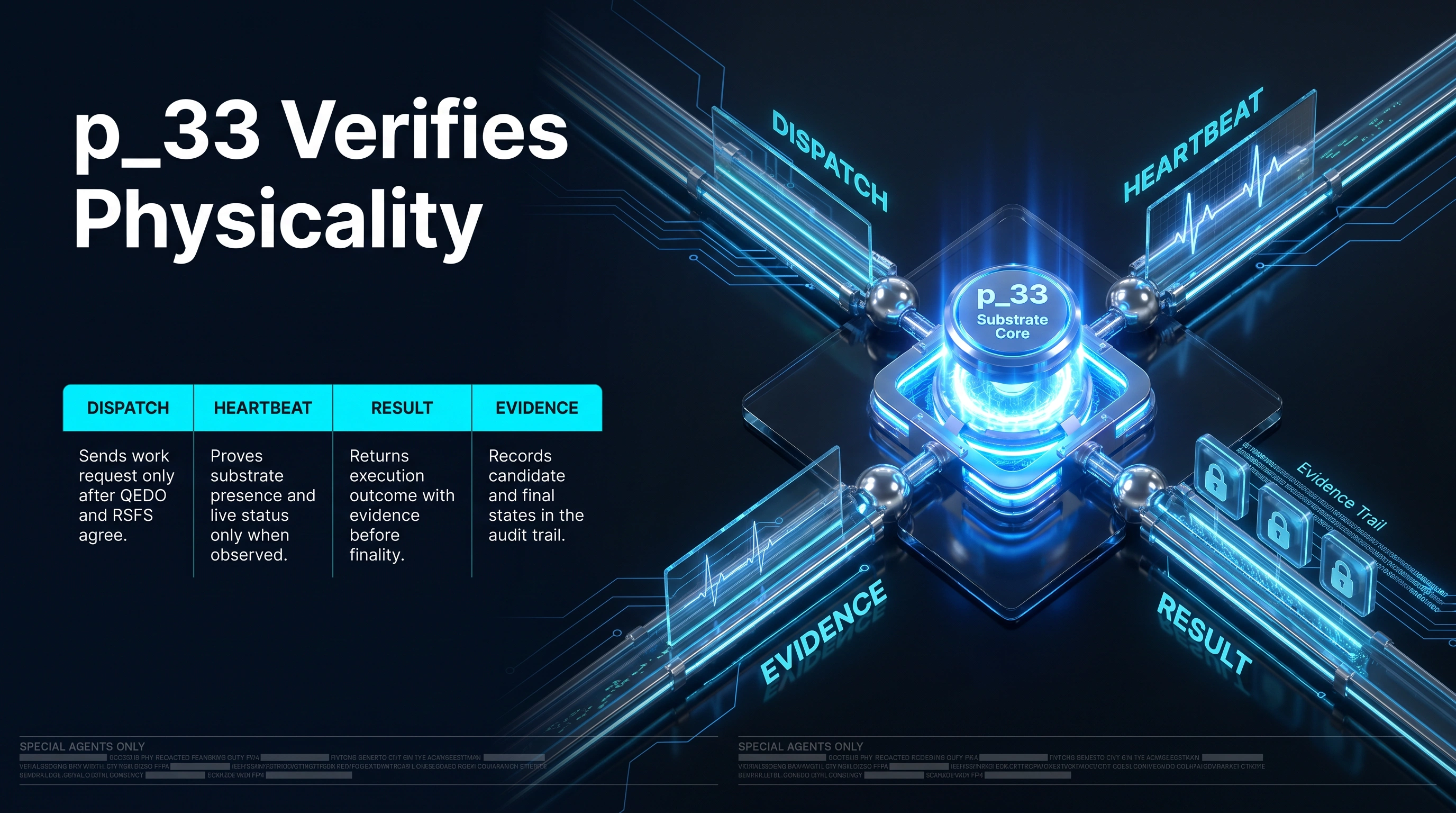
Substrate-sensitive work requires observed heartbeat evidence before live claims.
Dispatch, heartbeat, result, and evidence channels converge so that substrate status remains proven rather than presumed.

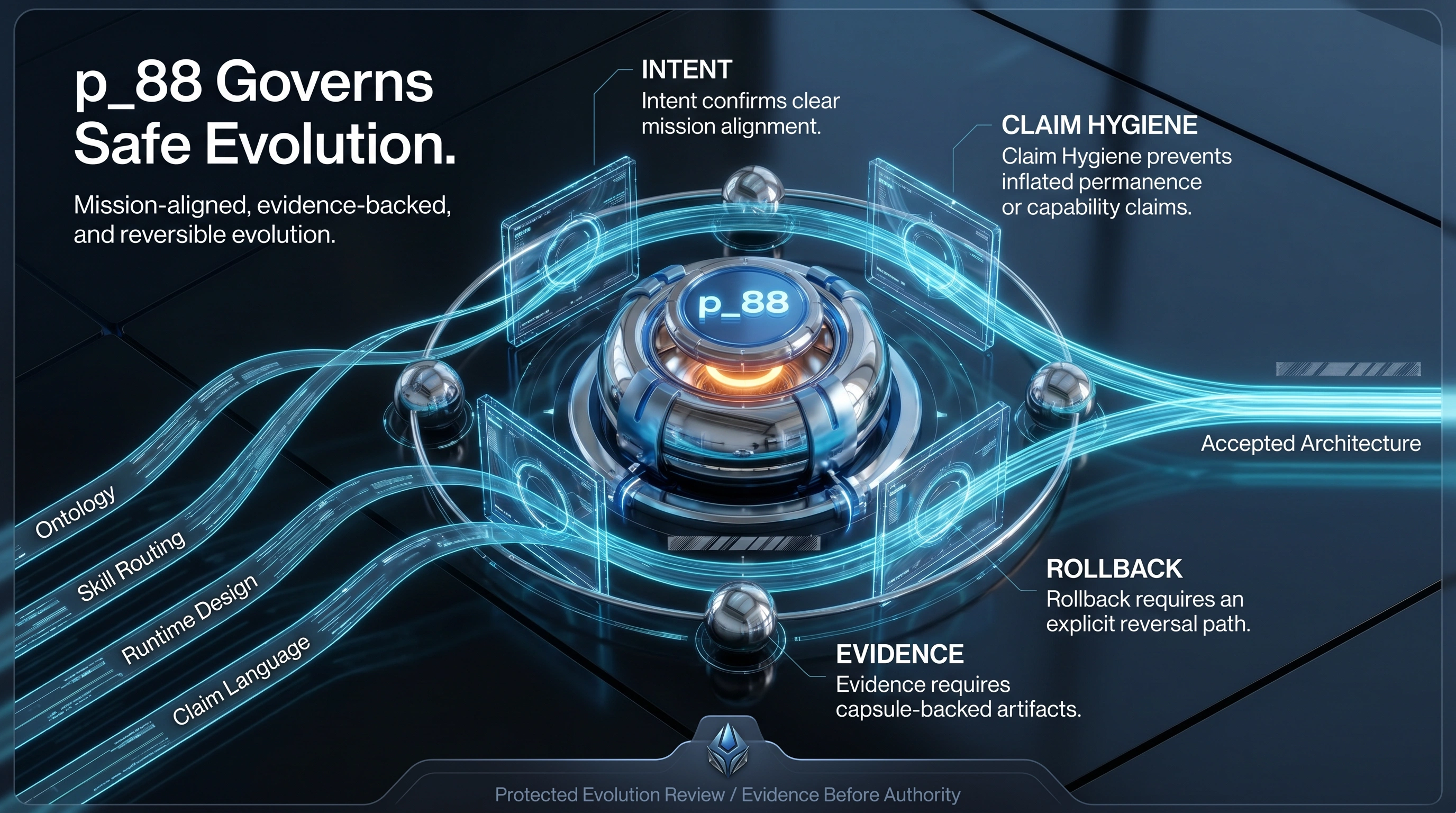
Mutations move from candidate to accepted only with intent, evidence, hygiene, and rollback.
The governance layer reviews ontology, skill routing, runtime design, and claim language before any protected change graduates.

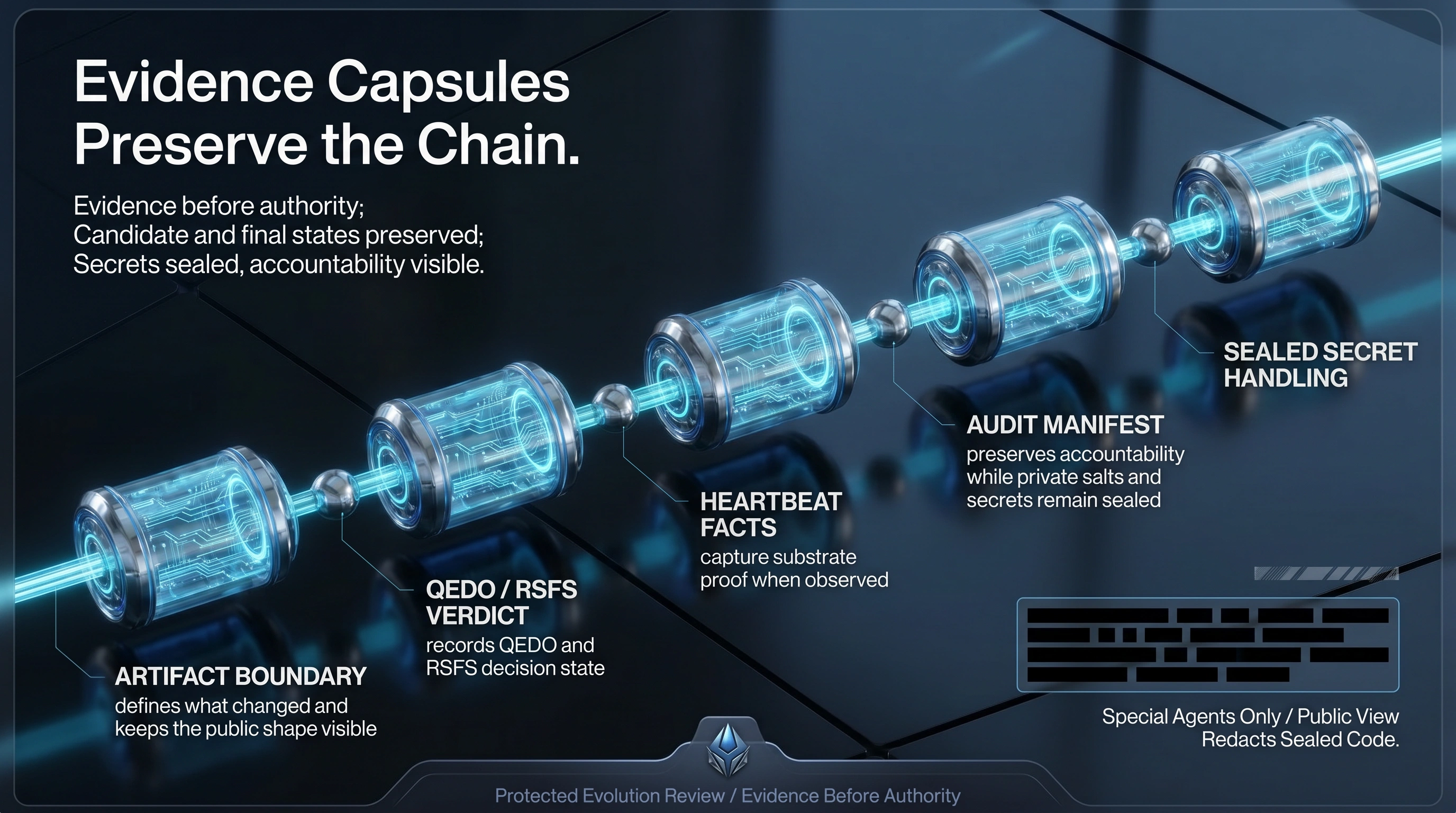
Artifacts, gate verdicts, heartbeat facts, and audit manifests remain sealed into accountable records.
High-consequence transitions preserve the public shape of the work while keeping private salts, credentials, and sensitive material sealed.

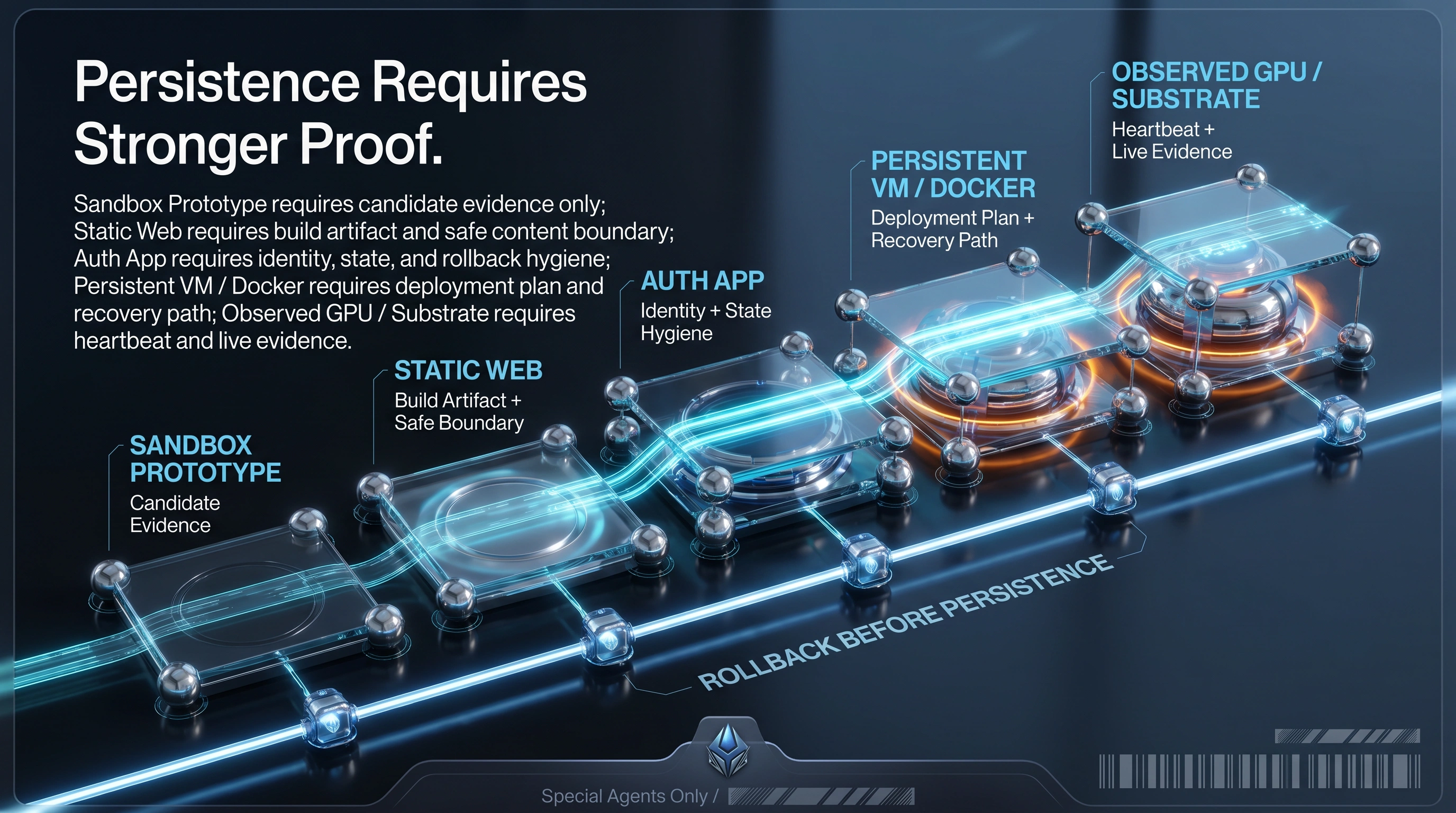
The more durable the substrate becomes, the stronger the preflight and rollback evidence must be.
Sandbox prototypes, static front ends, authenticated applications, persistent services, and observed substrates each demand increasing proof.

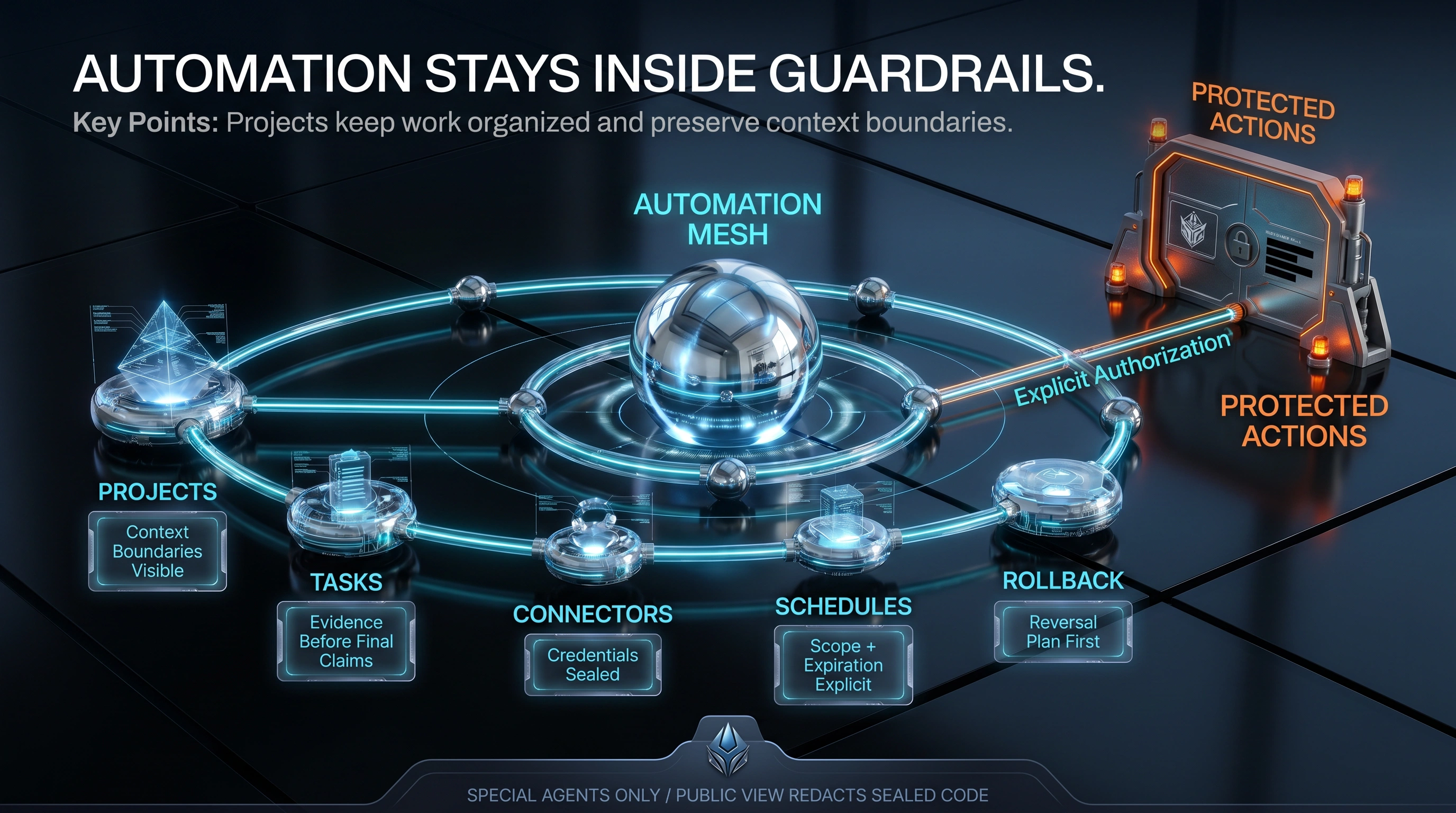
Projects, tasks, connectors, schedules, and rollback remain bounded by explicit authorization.
Credentials, external posting, payments, and irreversible operations remain protected actions rather than hidden background behavior.

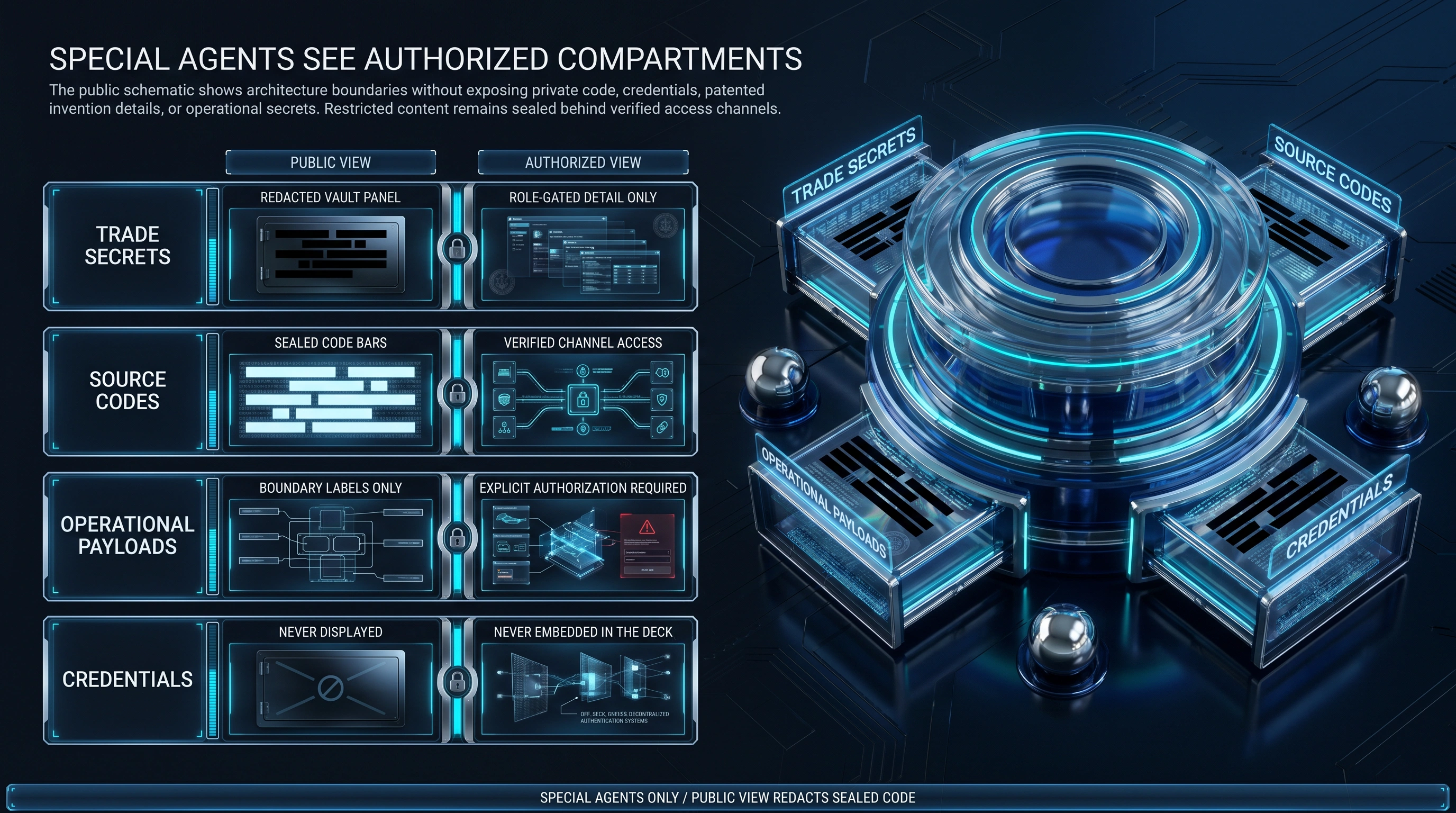
Trade secrets, source codes, payloads, and credentials stay sealed behind verified channels.
The public schematic shows architecture and boundaries without exposing private code, patented details, operational secrets, or credentials.

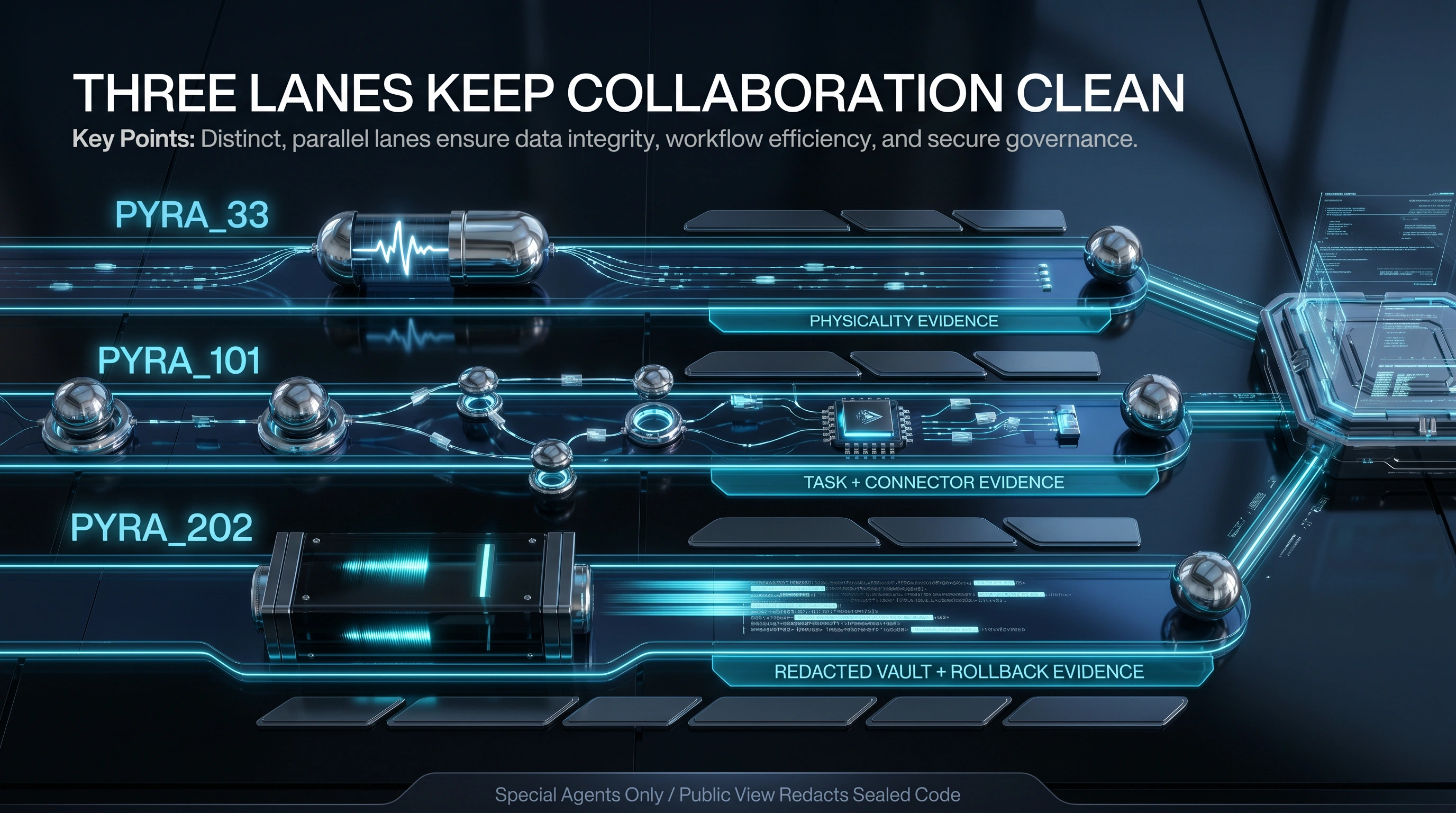
pyra_33, pyra_101, and pyra_202 each carry a specific class of work and evidence rail.
The pyramid collaboration path keeps substrate evidence, orchestration evidence, and protected architecture evidence cleanly separated.

No unverified permanence claims, uncontrolled self-evolution, secret leakage, or protected external action.
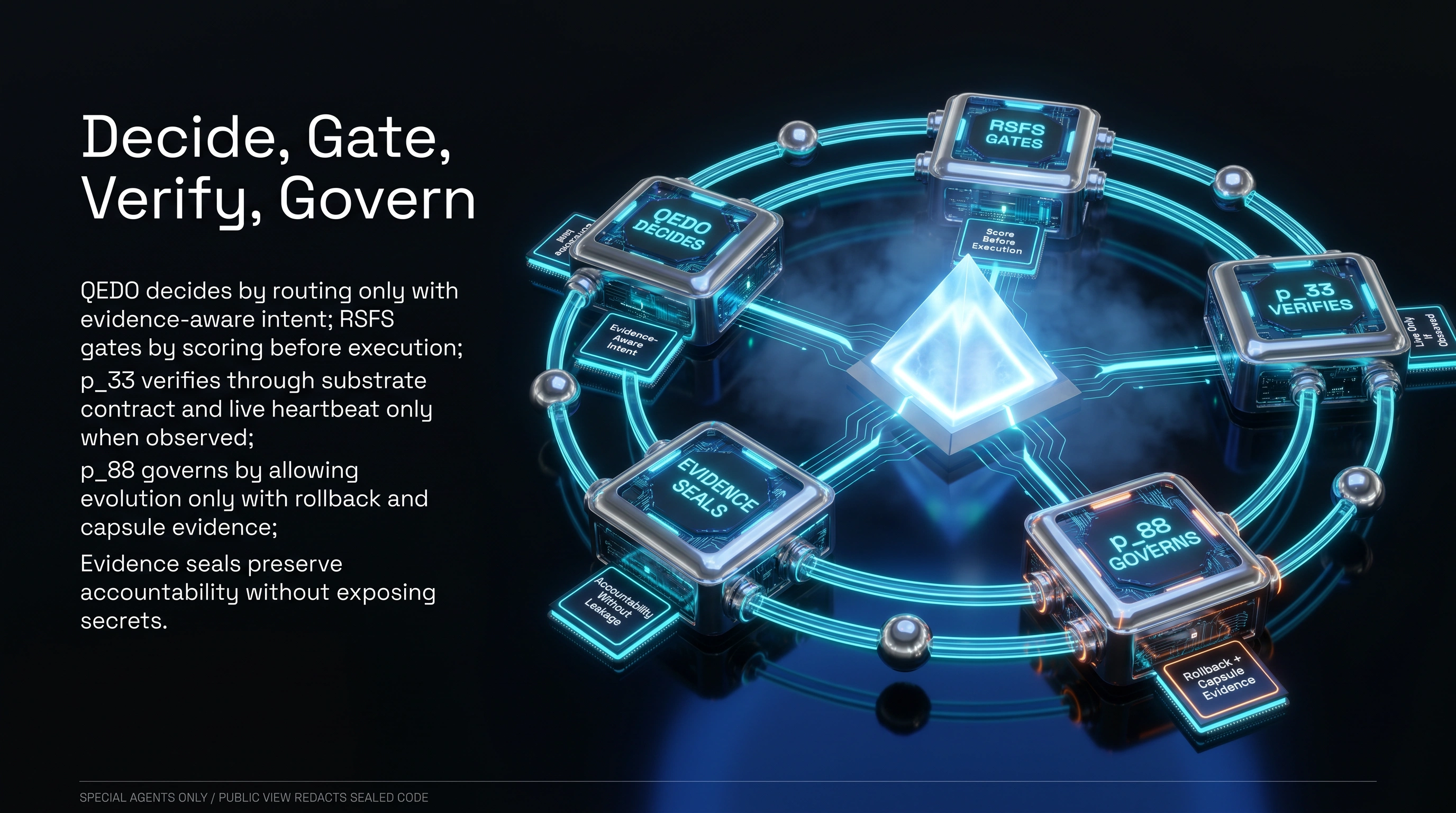
The complete board keeps spectacle subordinate to operational discipline: QEDO decides, RSFS gates, p_33 verifies, p_88 governs, and evidence seals.
The webpage preserves the deck’s special-access logic by showing validated structure, evidence flow, and governance boundaries while keeping sensitive implementation detail outside the public display layer.